


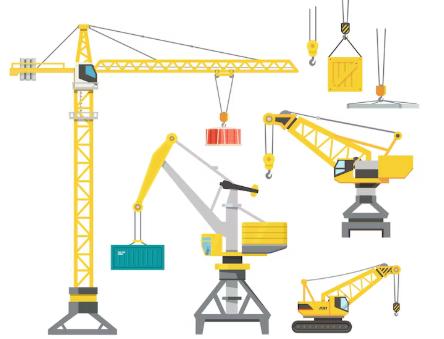
Overhead crane safety training is necessary not only to ensure your safety but also to ensure maximum safety. Here are some more reasons to take the overhead crane safety training:
1. Learn Safety Practices
Working with overhead cranes involves several types of safety risks. In some cases, workers actually need to risk their lives. Some of the most common face safety risks in the overhead crane industry are electrical hazards, overloading, falling objects, and crane boom failure.
In such cases, you need to follow safety practices to ensure your safety. Some of the most commonly followed safety practices in the overhead crane industry are the following:
- The very first safety practice is inspection. In this training, you will learn all the possible ways to inspect the cranes before and after the shift. In these inspections, the workers will learn to figure out all the potential issues in the cranes. At the same time, they make sure that the crane is completely alright before the shift.
- The workers dealing with the cranes are trained in the load limits, both minimum and maximum. At the same time, they are taught about the load lifting techniques for different weights.
- They are also trained to deal with crane emergency cases, such as unstable loads, equipment failure, and power outages.
Likewise, there are several other safety practices for overhead crane technicians.
2. Identify the Possible Risks
As you know, it is risky to deal with overhead cranes. The best way to reduce the risks is to identify all the possible risks and sort them out before the operations. However, not everyone is able to identify these risks.
Overhead Crane Safety Training is required to figure out all the possible problems with the crane. In the pre- and post-inspections, they will use different techniques to spot the issues. First of all, they check the electrical components in the cranes. All the power lines and electrical wires should be working properly and have intact insulation.
If there are damaged lifting slings and hooks, they will not overload the cranes. At the same time, they will identify all the broken brakes, mechanical systems, and other faulty crane components before starting their work.
3. Understand the Crane Operations
Crane is composed of several components. Every part has its own function. In these training sessions, the operators of the overhead cranes are taught about the crane’s components and operations. At the same time, they are trained in strategies to achieve maximum productivity.
4. Boost the Efficiency
The efficiency of the crane is one of the most obvious results of overhead crane safety training. Once they have ensured safety, they can easily increase the efficiency of the cranes. When you are protecting yourself from all the possible hazards and repairing all the minor issues immediately, you can prolong the working time of the cranes.
At the same time, when you are following all the maximum limits and balancing techniques of the loads, you can get the maximum work from the cranes.
