


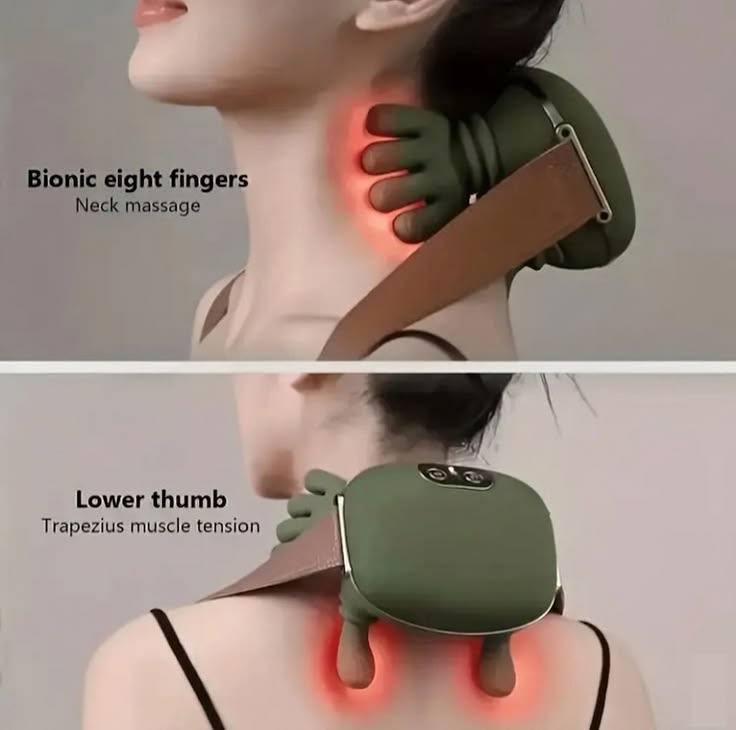
In modern massage technology, motion gets most of the attention—but texture is just as important. The feel of the contact surface determines how the body perceives pressure, comfort, and realism. Soft silicone nodes have become a key innovation in Hand Simulated Neck shoulder massager because they help replicate the natural softness and adaptability of human fingers.
While motors generate movement and structure defines alignment, it is the material at the point of contact that ultimately shapes the user’s experience.
Why Texture Is a Critical Part of Massage Realism
Human touch is not just about pressure—it is about how that pressure feels against the skin and underlying muscle.
Skin-Level Interaction
The skin is highly sensitive to texture, temperature, and flexibility. A rigid surface can feel mechanical, while a soft surface feels more natural and calming.
Pressure Distribution
Texture affects how force spreads across muscle tissue. Softer materials distribute pressure more evenly, reducing discomfort and improving relaxation.
Sensory Perception
The brain interprets soft, adaptive contact as more “human-like,” which enhances relaxation responses.
What Makes Silicone Ideal for Massage Nodes
Silicone is widely used in high-quality massagers because of its unique physical properties.
1. Soft Yet Durable Structure
Silicone provides a balance between flexibility and strength.
- Soft enough to mimic fingertip pressure
- Strong enough to withstand repeated motion
2. Skin-Like Elasticity
Its elastic behavior allows it to compress and rebound like human tissue.
3. Temperature Responsiveness
Silicone adapts well to heat, which is important in thermal massage systems.
How Silicone Nodes Mimic Human Fingers
Human fingers are not rigid tools—they are dynamic, adaptive structures. Silicone nodes attempt to replicate these qualities through design and material behavior.
1. Flexible Compression Response
When pressure is applied, silicone nodes deform slightly, similar to how human fingertips flatten against muscle.
Effect
- Creates a more natural “press and release” sensation
- Reduces harsh or mechanical impact
2. Rounded Fingertip Design
Nodes are often shaped with soft curves to mimic finger pads.
Why This Matters
Rounded surfaces:
- Distribute pressure more evenly
- Reduce localized discomfort
- Feel closer to human touch
3. Adaptive Surface Contact
As the massage nodes rotate or knead, silicone maintains continuous skin contact.
Result
This mimics the constant adjustment of human hands during massage.
The Science Behind Texture and Relaxation
The nervous system responds strongly to tactile quality.
Gentle Pressure Reduces Guarding Response
Soft contact signals safety, allowing muscles to relax instead of tightening.
Improved Sensory Feedback
A natural-feeling surface reduces cognitive resistance to mechanical stimulation.
Enhanced Parasympathetic Activation
Comfortable touch encourages relaxation responses in the nervous system.
Why Silicone Outperforms Hard Plastic Surfaces
Rigid Materials
- Feel mechanical and less natural
- Can create pressure points
- Often cause faster sensory fatigue
Soft Silicone Nodes
- Conform to muscle contours
- Provide cushioning during deep kneading
- Enhance long-term comfort
How Texture Works With Motion and Heat
Silicone nodes are most effective when combined with other massage technologies.
With Kneading Motion
Soft nodes enhance the realism of rotational and compressive movements.
With Heat Therapy
Silicone conducts warmth gently, adding to the sensation of human-like touch.
With Variable Pressure
Flexible material adapts better to changing intensity levels.
Why Texture Matters More in Sensitive Areas
Certain body regions respond more strongly to tactile differences.
Neck and Cervical Area
Highly sensitive to pressure; soft nodes prevent overstimulation.
Shoulder Trapezius
Requires deep but comfortable contact for knot release.
Upper Back
Benefits from broader, cushioned pressure distribution.
How Silicone Enhances the “Human Touch Illusion”
The combination of softness, flexibility, and warmth creates a strong sensory effect.
Emotional Comfort
Soft contact is associated with care and relaxation.
Realistic Pressure Feel
Mimics how human fingers gradually sink into muscle tissue.
Natural Movement Integration
Works seamlessly with mechanical motion patterns.
Design Challenges of Silicone Nodes
While effective, silicone must be carefully engineered.
Balancing Softness and Control
Too soft reduces pressure effectiveness; too firm reduces comfort.
Durability Concerns
Repeated motion requires high-quality material formulation.
Heat Compatibility
Must maintain structure under thermal therapy conditions.
Why Texture Improves Overall Massage Effectiveness
Better Muscle Engagement
Soft nodes maintain consistent contact, improving kneading efficiency.
Increased User Comfort
Reduces discomfort during deeper pressure settings.
Longer Sessions Possible
Comfortable texture allows extended use without irritation.
Final Thoughts
Texture plays a crucial role in transforming mechanical massage into a human-like experience. Soft silicone nodes replicate the flexibility, warmth, and responsiveness of human fingers, making massage devices feel more natural and comfortable.
When combined with motion systems, heat therapy, and ergonomic design, silicone-based contact surfaces significantly enhance both the realism and effectiveness of modern hand-simulated massage technology. In many ways, it is this subtle material choice—not just the motor or mechanics—that defines how close a device comes to replicating real human touch.
